


Measurement studies put the average erect penis at about 5.1 to 5.2 inches. Against that benchmark, 4 inches is below average but still normal, 5 inches is essentially average, 8 inches is well above average and genuinely rare, and 9 inches is rarer still. Here's how each length compares, how common it actually is, where the lines between 'average', 'big' and 'rare' really fall, and how to measure so you're comparing like with like.
What is the average penis size?
The largest pooled analysis of penis size, published in BJU International in 2015, measured more than 15,000 men, showed that the average erect length was 5.1 to 5.2 inches, the average flaccid length was about 3.6 inches, and the average erect girth was about 4.6 inches. Around 68% of men are between 4.5 and 5.8 inches erect, and roughly 90% are between 4 and 6.3 inches. Everything outside that band gets rare fast.
Is 4 inches small?
Four inches sits around the 5th percentile, below average, yes, but still within normal variation and not a medical concern on its own.
Micropenis is a real, clinically defined condition, but the threshold sits well below 4 inches. Cleveland Clinic defines it as a stretched length of 2.67 inches (6.8 cm) or less; other sources use about 3.67 inches. Four inches erect is clear of the line on any definition, and micropenis affects only around 0.6% of men.
Weight matters here too: a fuller lower-abdominal fat pad hides part of the shaft, so a man can measure 'shorter' without having lost anything. Losing weight can reveal length that was always there; at the extreme, doctors call a shaft hidden by fat a buried penis.
Is 5 inches small?
No. Five inches sits close to the 40th percentile, a fraction of an inch under the 5.1 to 5.2 inch average, a rounding difference, not a size gap. 'Is 5 inches small?' is one of the most-searched size questions online, which says far more about anxiety than about anatomy.
Is 5.5 inches big?
Above average, but not in the 'big' band. Five and a half inches lands around the 70th to 75th percentile, larger than most men, but the genuinely large territory starts closer to 6.5 inches. It's a comfortably above-average size.
Related: 6 inch penis, how common it is and how it compares
How rare are 8 and 9 inches?
This is where the range stops being ordinary.
- 8 inches sits so far beyond the average that most measurement studies don't capture it in meaningful numbers.
- 9 inches is rarer again, into a territory that studies can't measure reliably.
- Both sit far outside what pornography presents as typical. The performers are outliers, cast precisely because they aren't average.
Modeled against the spread in the BJU data, 8 inches and above accounts for a small fraction of 1% of men. The BJU nomogram only reports up to about the 97th percentile, which is roughly 6.5 inches erect. The paper didn’t have enough men at the top of the range to report, so 8 and 9 inches fall outside this range, which is typically very rare.
Where each length sits against the average
Reading each length against the BJU International nomogram, here's how the whole range breaks down, from below average to genuinely rare. It's also the honest answer to what 'big' or 'hung' means: the top few percent, roughly 6.5 inches and up, not the 7-to-9-inch figures thrown around online.
| Category | Erect length | Where it sits |
|---|---|---|
| Below average | Up to ~4.7 in | Under the 25th percentile — smaller than most, still within normal variation |
| Average | ~4.7–5.6 in | The middle band (25th–75th) where half of all men sit |
| Above average | ~5.6–6.0 in | 75th–90th percentile |
| Notably large | ~6.0–6.5 in | 90th–97th percentile — bigger than 9 in 10 men |
| Rare / very large | ~6.5–7 in | Roughly the top 1–3% |
| Exceptional | 7 in and above | Around the top 99th percentile and the top 1% |
| Extremely rare | 8–9 inches | Beyond the 99.9th percentile. 8–9 in is a small fraction of 1%, beyond what studies measure |
Related: How many guys have 7 inches
What does each length look like?
Numbers on a ruler are abstract, so it helps to picture them against everyday objects. These are rough, real-world references for a bone-pressed erect measurement:
- 4 inches: about the long edge of a bank card plus a little, or roughly two AA batteries end to end.
- 5 inches: close to the height of a standard drinks can, and right around the average.
- 6 inches: almost the full length of a banknote (a US dollar bill is 6.14 inches).
- 7 inches: roughly the length of a standard unsharpened pencil.
- 8 inches: about the width of a sheet of A4 paper, and rare enough that most studies don't measure it.
- 9 inches: roughly the length of a standard dinner knife, and even rarer.
Seen side by side, the everyday truth is clear: most men sit close to the 5-inch mark, and the lengths that dominate online conversation are the ones you'd almost never actually come across.
How you measure changes the number
A lot of size anxiety comes from comparing a badly-taken measurement against a research average. Common mistakes and their fixes:
- Not pressing to the bone. The clinical standard is bone-pressed — ruler pushed in past the fat pad to the pubic bone. Measuring on top of the skin reads short by 0.5 to 1 inch.
- Measuring the underside, or at a partial erection. Both distort the figure. Measure along the top, fully erect, with a rigid ruler.
- Trusting flaccid size. 'Growers vs showers' means flaccid length barely predicts erect length, so only a bone-pressed erect measurement is worth comparing.
Our size guide covers the method and the right fit.
Does height correlate with size?
A little, but not enough to predict anything useful. The BJU International review found a small correlation between height and erect length. Small is the operative word. Tall men are not reliably bigger, and shorter men are not reliably smaller. Shoe size, hand size and other proxies people rely on have no solid evidence behind them either.
Does losing weight make your penis bigger?
This depends on what you mean. Weight doesn’t make your penis smaller and losing it doesn’t make it grow. But there is a correlation between penis size and weight. Losing weight can make your penis look larger and can make more of it visible. Weight around the lower abdomen covers part of the shaft; losing it reveals length that was already there rather than growing anything new.
Size myths worth dropping
- “The average is 6 inches.” No, it's about 5.1 to 5.2 inches. It’s common for men to inflate their measurements by roughly half an inch to an inch, compared with clinician measurements.
- “Hand, foot or shoe size predicts it.” No reliable link exists. The strongest correlation found with height is far too weak to make any predictions.
- “Flaccid size shows what you'll be erect.” It doesn't. The change from soft to hard varies enormously between men.
- “Race reliably predicts size.” There's no reliable evidence for this. The largest measurement review couldn't draw conclusions about ethnicity from its data, and broader syntheses find that any average differences between groups are small and inconsistent.
What actually matters more than the number
Length rarely changes the experience much, but girth, fit, and confidence do more of the work. When researchers asked women to choose from 3D models; the average preference for a long-term partner was about 6.3 inches in length and 4.8 inches in girth; for a one-off partner, it nudged up to 6.4 by 5.0 inches. The theme across satisfaction research is consistent: circumference drives the sensation of fullness and contact more directly than length does.
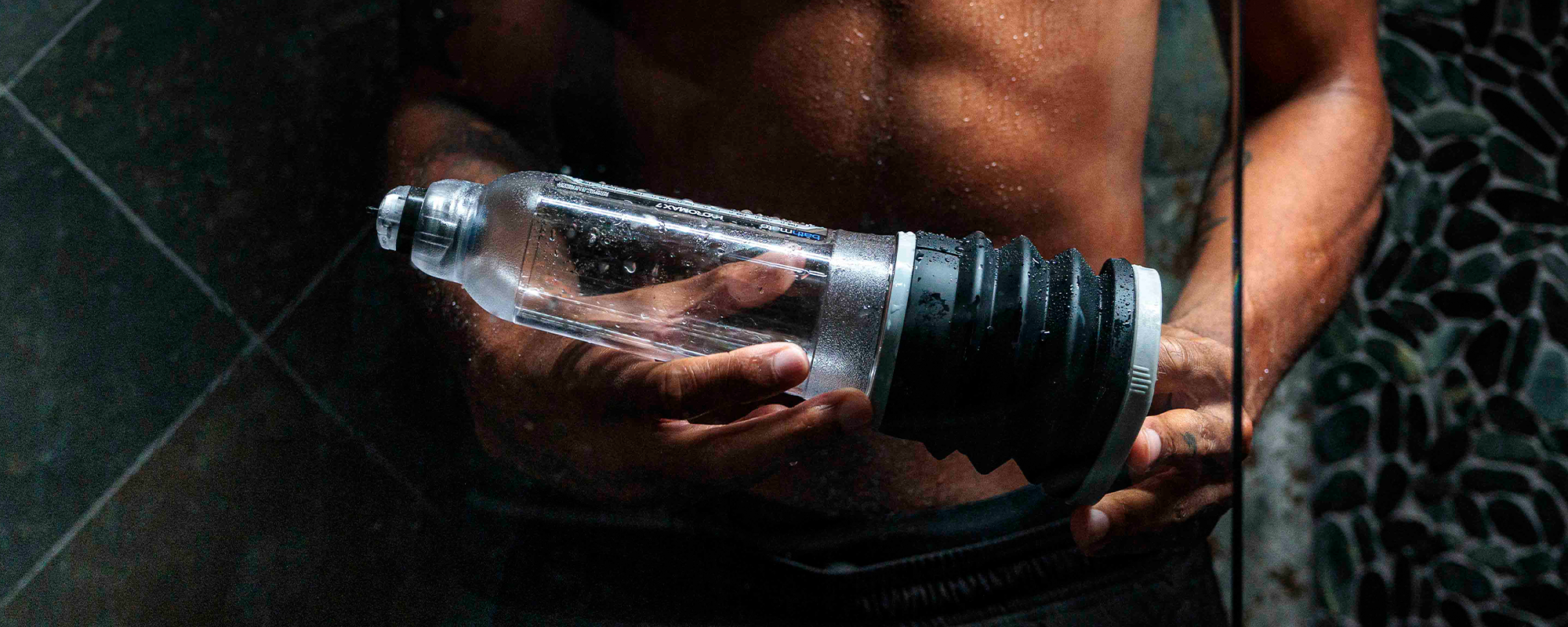
A "good" girth, then, is simply around or a little above the 4.6-inch average, and unlike length, it responds to training. That's exactly what Bathmate's hydropumps are built around: consistent use develops girth and fullness over weeks, no gimmicks and no overnight fix. Check your figure against the size guide, then browse the penis pumps range for the model built for your starting point; the results page shows what that looks like week by week.
Penis size comparison FAQs
What is considered big or 'hung'?
Realistically, the top few percent, roughly 6.5 inches and up. Six inches is above average but not rare; 7 inches is about the top 1%.
What percentage of men have 8 inches?
A small fraction of 1%. It sits in the far tail of the curve, beyond where measurement studies have the sample size to count precisely.
What percentage of men have 9 inches?
Rarer still, well below the already tiny share at 8 inches, and too far into the tail for studies to measure reliably.
How rare is 7 inches?
About the top 1% of men. See how many guys have 7 inches for the full breakdown.
Ready to focus on what you can actually change?
Wherever you land on the range, length is fixed, but girth and fullness respond to consistent work, and that's what a hydropump is built for. Compare our penis pumps to find the model matched to your starting point.
Every Bathmate is FDA-registered, backed by a 2-year warranty and a 60-day money-back guarantee, and comes with free, discreet worldwide shipping. Have a question before you buy? Our team is happy to help. Contact us or browse our blog for more information.




Charlie Walsh
Learn MoreCharlie Walsh is a writer at Bathmate, specializing in creating informative, engaging, and relatable content about men’s health, confidence, and wellbeing. Through his writing, Charlie helps readers better understand Bathmate’s products and the science behind them—always with a focus on honesty, empowerment, and real-world results.
Partilhar:
Disfunção erétil vs. ansiedade de desempenho: como perceber a diferença?
6 Inch Penis, How Common It Is And How It Compares